Why We're Building
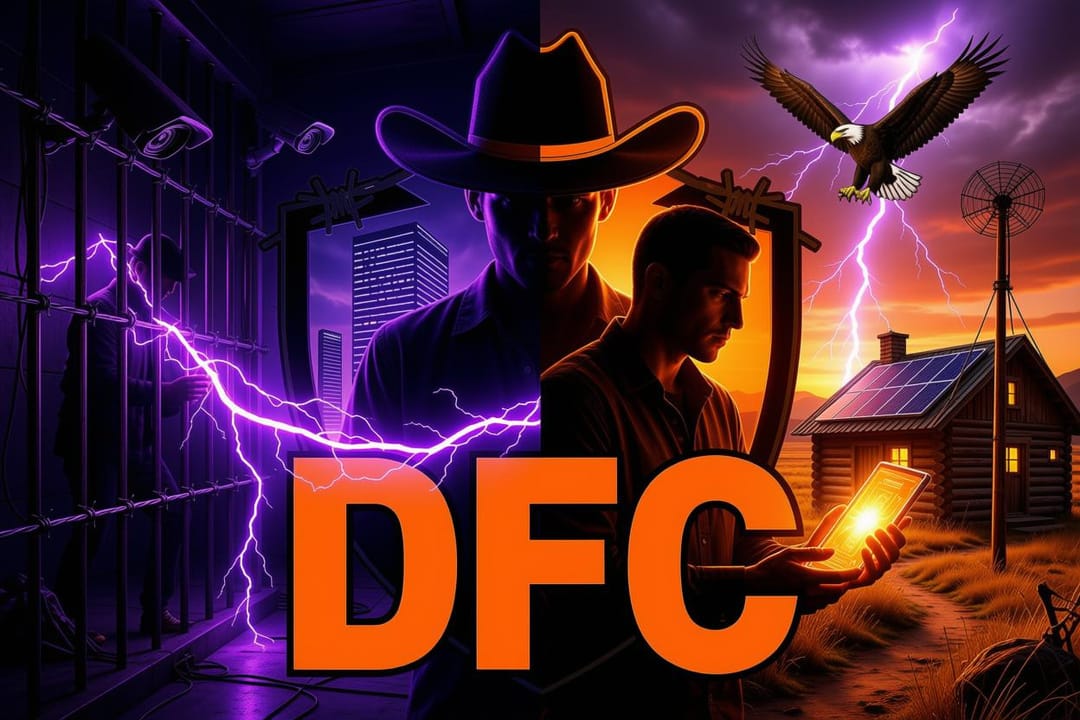
The Signal in the Noise
Maybe you've felt it first on your phone. Every pick-up, someone's selling you something. Every scroll, every click, every pause — measured, packaged, auctioned to the highest bidder. You aren't the customer. You're the commodity.
Then the exhaustion set in. That low hum underneath everything. The sense that no matter how hard you push, something's always taking a cut — your data, your attention, your dollar, your dignity. Nickel and dimed at every turn.
And now? Half the things you see online, you can't even tell if a human made them anymore. Is this real? Was it generated? Does it matter when the feed never stops?
Community used to mean neighbors. Shared tools. Borrowed sugar. Someone to call when things broke. Now it means a comment section. A follower count. A metric in someone else's dashboard.
We think that's broken. And we think we can build something else.
The Quiet Machine
Here's what's strange about the system: it's quiet. It doesn't announce itself. It doesn't kick your door in. It just... is. Like the air you breathe. You don't notice it until one day you do.
It started small. So small you'd feel silly complaining. A dollar ninety-nine for a sword skin in a game. A little boost. A little color. No big deal. Everybody was doing it. Then it was a dollar ninety-nine a week on your phone — barely a rounding error. You didn't flinch.
But the doors kept opening wider.
Now getting a new outfit isn't a purchase — it's a loan commitment. Eighteen ninety-nine a month for twelve months. But hey, you were invited on a free cruise, right? You come home with two hundred dollars in new monthly payment commitments. Who knew you could get cruise ship drinks on credit? Plus interest, of course. The system is always hungry.
And that's the hook, isn't it? Push a button, get what you want. Cheap streaming. Cheap shipping. Cheap dopamine. It's designed to keep you locked in — not because you're weak, but because the system was built to make leaving harder than staying. When you're scraping by, when you're using your last few dollars for Netflix and Amazon orders that are cheap, it's because the system made it that way. Not because you failed. Not because you didn't work hard enough. It's not your fault.
You can't buy a car. Not really. You can get a loan for one — and spend thirty years paying for the privilege of driving something the bank takes back if you miss one check. Buying a house? That's not a purchase. That's a generational commitment. You're not buying a home — you're inheriting a mortgage you'll pass down like a family heirloom. And you'll call it an investment because that's what they told you to call it.
And even if you make it. Even if you grind it out for thirty years and sign that last payment and hold that title in your hand — you don't own it. You rent it from the county. Miss the property taxes one time. One bad year. One medical bill. One layoff. And the system calls again. What was promised to be forever, gone in a moment. A paid-off home seized over a debt smaller than the closing costs that sold it to you.
And where are the people who were supposed to step in? The watchdogs. The institutions. The representatives. The ones you were told would speak up when something went wrong. Silent. Or worse — sitting at the same table, because they're part of the system too. They benefit from you buying in. From you staying in. From you not asking too many questions. The people who were supposed to be the check on the machine became the machine. The referees put on jerseys.
Makes you mad at the old folks, right? Baby boomers hold half of all U.S. household wealth. They've got it all. But here's what they don't tell you: the top 10% of boomer households hold roughly three-quarters of that generational wealth. The average looks impressive until you realize it's a handful of millionaires pulling the average up while the median boomer sits on a fraction of that. And if that boomer's living on Social Security alone, without any other income, the game's coming for them too — the rental trailer they owned just went up a thousand bucks a month. The Social Security cost-of-living adjustment came in lower than inflation. Again. They get kicked out the same way you do. Just twenty years earlier.
And it's not just boomers. You're mad at the cashier who can't help you, the call center rep reading off a script, the gig driver who showed up late, the nurse on her fourth twelve-hour shift, the teacher buying classroom supplies with her own paycheck, the construction worker whose back gave out at forty-five, the line cook sweating over a flat top for tips that haven't kept up with rent since 2009. They feel the same strain you feel. Same pressure. Same exhaustion. But the system forbids those it pays from speaking out — not with a gag order, just with the quiet threat of losing the only income keeping them afloat. So instead, both you and them suffer in silence, side by side, while the system and the ones who benefit from it feel nothing.
That's the trick. The system pits you against the only other people in the same boat. Keeps you busy fighting sideways instead of looking up.
It's all metrics. Profit and loss. Who owns who anymore? The shell game of corporations has gone so far beyond what any reasonable person could track that the very question feels exhausting. You don't know who owns the company that owns the service that bills you for the thing you need to function. Nobody does. That's not an accident. That's the design.
And then comes the moment — and maybe you've had it, maybe you haven't yet — when you realize the system does not bend to you. Not in any direction. Not in any way that matters. You work within its boundaries or you don't work. And the moment you stop working for it? Those safety nets you were told would be there — the ones you paid into your whole life — they're thinner than you thought, and the fall is farther than they told you. The system will eat you. Not maliciously. Not personally. Just... efficiently.
Own nothing. Pay for everything. Work for not enough money to own anything. Wake up. Do it again. Call it living.
That is not living. That is abiding within the boundaries of what you've been told you are given. Surviving inside a fence someone else built and told you was the whole world.
We're here to tell you it's not the whole world. And it's not your fault you're inside the fence. The system and the ultra-rich who built it designed this to trick you and keep the rewards of your labor. But you don't have to stay. And you don't have to leave alone.
Who We Are
Right now, DFC is one cowboy and two folks who jumped on the boat. That's it. Three people, some salvaged hardware, a mining rig catching hashes in the corner, and a plan that doesn't fit on one whiteboard.
But the list of who we are isn't the point. The point is who we're for. Salvagers, builders, miners, hackers, tinkerers, content creators, farriers, oil field hands, line cooks, nurses, teachers, mechanics, artists, gamers, streamers, and day-one dreamers. Some of y'all love social media. Some of y'all built audiences on the platforms everyone loves to hate. Some work the rigs, some work the land, some work the keyboard. That's not a contradiction — that's the point.
DFC isn't about quitting. It's not about throwing your phone in the river and pretending the modern world doesn't exist. It's about owning it. Owning your tools. Owning your data. Owning your media. Owning your income. Liking social media is fine. Being a great content creator is fine. What's not fine is building your entire digital life on rented ground and calling it freedom.
The Cowboy will find it, build it, share it, and make it user-friendly and accessible — systems that do the same thing the corporate ones do, just without the data collection, the nickel and diming, the data leaks, the identity theft. If you've been looking for somewhere to actually go, this is it.
DFC isn't a company trying to sell you a product. It's a working proof of concept — a demonstration that one person, then two, then ten, then a hundred, can build a complete digital life without surrendering sovereignty to the systems designed to extract from them. No investors. No board. No analytics package watching you read this.
Three people today. The door's open. Come build.
And this ain't free. DFC WORKS HARD. Every node tested. Every panel mounted. Every script debugged. Every dollar counted. Salvage doesn't happen by accident. Mining doesn't find blocks by luck. Self-hosting doesn't stay online by wishful thinking. This is sweat, patience, and stubborn refusal to accept the lease-only model. Come ready to roll up your sleeves.
The Problem Isn't the System. The Problem Is There's Only One.
The system isn't broken. It's working exactly as designed. For centuries, it's been engineered to concentrate control, commodify attention, and extract value from people who never consented to being products. You can't fight that. It was built to win fights. That's the trap — spend your energy raging against it and you're still inside it, still generating data for the machine.
The way you win isn't by fighting. It's by building something else.
A parallel system. Decentralized. Owned by the people who use it. Infrastructure that answers to the community, not a quarterly earnings call. Communication that doesn't require a cell tower's permission. Money earned through compute labor, not issued by an authority that prints it faster than you can earn it. Media hosted on soil you control. Data that never touches a server farm you can't walk to.
You don't have to give up your comforts. You have to own them. Streaming without the subscription empire. Storage without the cloud landlord. A phone that serves you, not advertisers. The technology exists. The knowledge exists. What's missing is someone showing it works — and how to do it.
That's us. That's DFC.
What We're Actually Building
This isn't a wishlist. This is happening, right now, on salvaged hardware and stubbornness.
Crypto Mining — GPU and ASIC lottery miners running today. Solar-powered expansion planned. Not get-rich-quick. Slow, steady, compute labor that earns sats the system can't print or dilute. Your hash, your wallet, your reward.
Solar Builds and Installation — Off-grid power that doesn't disconnect you — it reconnects you. To your own infrastructure. To your own energy independence. Panels, batteries, MPPT controllers. Real systems, documented builds, honest costs.
Survival Database on USB Flash Drive — A complete offline knowledge base loaded on a flash drive. Plug it into any computer, anywhere, anytime. Full wiki articles, PDFs, videos, instructional manuals covering survival, emergency preparedness, solar power, water purification, and more. No internet required. No cloud dependency. Your knowledge, on your soil, in your pocket. Prototype complete — launching in the Patreon shop in approximately two weeks.
Data Sharing Server Network — Running on our Master Server. Decentralized data storage and sharing that doesn't pass through a corporate data center. Community-owned infrastructure. Files that live on hardware you can walk to.
War Driving — Mapping wireless networks. Understanding the digital terrain around you. Because you can't build secure systems if you don't know what's broadcasting in your neighborhood. Built a dedicated cyberdeck from a locked-down Samsung A8 tablet — no Google, no Samsung, just FOSS tools and a keyboard. Salvage at its finest.
Meshtastic / Meshcore — Communication without cell towers. LoRa-based mesh networking. Messages that don't pass through a carrier's switches. Cowboys talk without permission. Your frequency belongs to you. Testing goes live next week.
The Camper and the Land — We're selling the house. Bought a 2016 Jayco Jay Flight SLX 154BH. Looking for land to build the homestead. Not running — relocating with purpose. Taking the infrastructure mobile, then planting roots on our own soil. Off-grid but fully connected. This is the path from Phase 0 to a real homestead.
Selling the House — Not because we failed. Because the mortgage is the trap, and we're choosing the door. Trading a 30-year commitment for wheels and freedom of movement. The homestead comes later, on land we choose, with infrastructure we build.
The Cowboy Code
We cooperate with people, not platforms. Entities are weather, not allies. We use what we must, document every compromise, and always carry a migration path. No permanent dependencies. No silent surrenders.
We build outside, not against. You don't tear down a fortress by throwing yourself at the walls. You build something better down the road. Let folks wander over when they're ready.
Hardware gets a second life. The best server is one someone else threw away. The best laptop is the one a corporation decommissioned because it was six months old. We keep good tech out of landfills and put it back to work. Sustainability isn't a buzzword here — it's the business model.
Money is mined, not minted. Earn through compute labor, not issued by an authority that devalues your savings by printing more. Your hash, your wallet, your labor, your reward.
Your data lives on your soil. No Big Tech analytics. No telemetry. No corporate ad networks. No profile being built to predict and manipulate you. Your information belongs to you and the community you choose to share it with.
Your frequency belongs to you. Communication infrastructure is too important to outsource. If someone else owns the network, they own the conversation. We build our own lines. Meshtastic, mesh networks, war driving — we map and build our own communication infrastructure. Cowboys talk without permission.
Stubborn independence — collectively. We're not lone wolves. We're a herd that moves together by choice, not coercion. Every cowpoke stands on their own, but no cowpoke stands alone. Independence isn't isolation — it's the freedom to choose your community. This isn't about owning everything or getting yours in before everybody else loses. It's about building strong, supportive networks that aren't predatory like literally everything else today.
Show, don't tell. Build the thing. Document the process. Share the failures. A working system is the argument. Trust is earned through transparency, not promises. Anything we build can be freely audited. No black boxes. No hidden code. You see what we see.
DFC WORKS HARD. This isn't theory. It's not overnight success stories or magic hacks. It's salvage. Testing. Debugging. Mounting. Counting. War driving. Building. Every system documented. Every failure recorded. No shortcuts. Just honest work and a willingness to show the receipts.
What DFC Offers
DFC is a resource. Not a movement with a membership card. Not a subscription tier. A living, breathing demonstration that digital freedom isn't theoretical — it's buildable, today.
Signing up is for support and early access. You're not buying a product — you're fueling the build. Backers are included in what we're creating. You see how it's happening. You get access to test beds, configs, blueprints, and salvage before anyone else. Some database and mainframe content from the Master Server requires top-tier access (maintenance support is necessary to keep those systems running). But everything we build can be freely audited. No secrets.
Ideas in the works for backers: get a crypto miner shipped to you with setup guide. Deploy a mesh or data node in your area. Start small. Build something big. The invitation is here.
The survival flash drive launches in the Patreon shop in approximately two weeks — a complete offline knowledge base you can hold in your hand. Plug it in anywhere. Own your information.
If you've ever felt trapped — like the game was rigged, like you were running faster and falling further behind, like the world was getting louder and lonelier at the same time — this is for you. Not a pitch. An invitation.
Come learn how to host your own media. Come see what crypto mining looks like when it's solar-powered and community-owned. Come build a mesh network where your messages don't pass through a data center in another state. Come grab a flash drive that works when the internet doesn't.
Don't give up your comforts. Own them.
The Parallel System Wins
We're not asking anyone to smash their phone. We're not telling you to delete your accounts and light out for the territory. That's not freedom — that's exile.
You don't have to leave immediately. That's what this Patreon is for. Subscribe to support driving the mission. Give us the time and resources to build, fight, engineer, and win — for not just you, but us. While you're still in the system, we're building the exit ramp. Node by node. Panel by panel. Block by block.
Freedom is having the option to leave. Freedom is knowing that if the platform changes its terms, if the service shuts down, if the ad network decides your data is worth more than your trust — you have somewhere to go. Infrastructure you helped build. Community that knows your name.
The old system was built over centuries. We're not going to out-shout it. We're going to build quietly alongside it until the parallel system is the one people choose — not because they're angry, but because it's better.
When someone asks how to opt out, we want the answer to be: "Here. Start here. This is how we did it."
That's the win condition. Not defeating them. Making them irrelevant.
Ride With Us
DFC is open to anyone who's tired of being the product. No gatekeeping. No credentials. You don't have to be skilled or already set up. Just come say howdy.
We're forming partnerships with anyone interested — individuals, groups, other co-ops, makers, builders, dreamers. You bring curiosity, we'll bring what we've learned. You bring skills, we'll bring the test beds. You bring nothing but willingness, and that's enough to start.
The trail's already blazed. The first node is running. The first panel is catching sun. The mining rig is hashing. The server is serving. The cyberdeck is scanning. The mesh goes live next week. The flash drive drops in two weeks. The camper is secured. The road is open.
Three people today. Tomorrow, more. The door's open.
Come build.
-T.C.